

There aren't many trees out there that can handle dry soil, wet soil and periodic flooding. Hackberry, hardy and reliable, is at home in all those conditions.
Hackberry makes a great street tree and shade tree, and it does well just about anywhere in a sunny to partly shady spot in the home landscape.
A member of the Hops family, Hackberry also is a larval host to the Hackberry Emperor, Question Mark, Eastern Comma, Mourning Cloak and dozens of other butterfly and moth species.
While Hackberry's spring blooms are inconspicuous, in fall it features golden yellow leaves and deep, red edible berries. Mockingbirds, Bluebirds and other migrating and non-migrating birds seek out those highly nutritious berries when other food is scarce. The birds also use hackberry for cover and nesting.
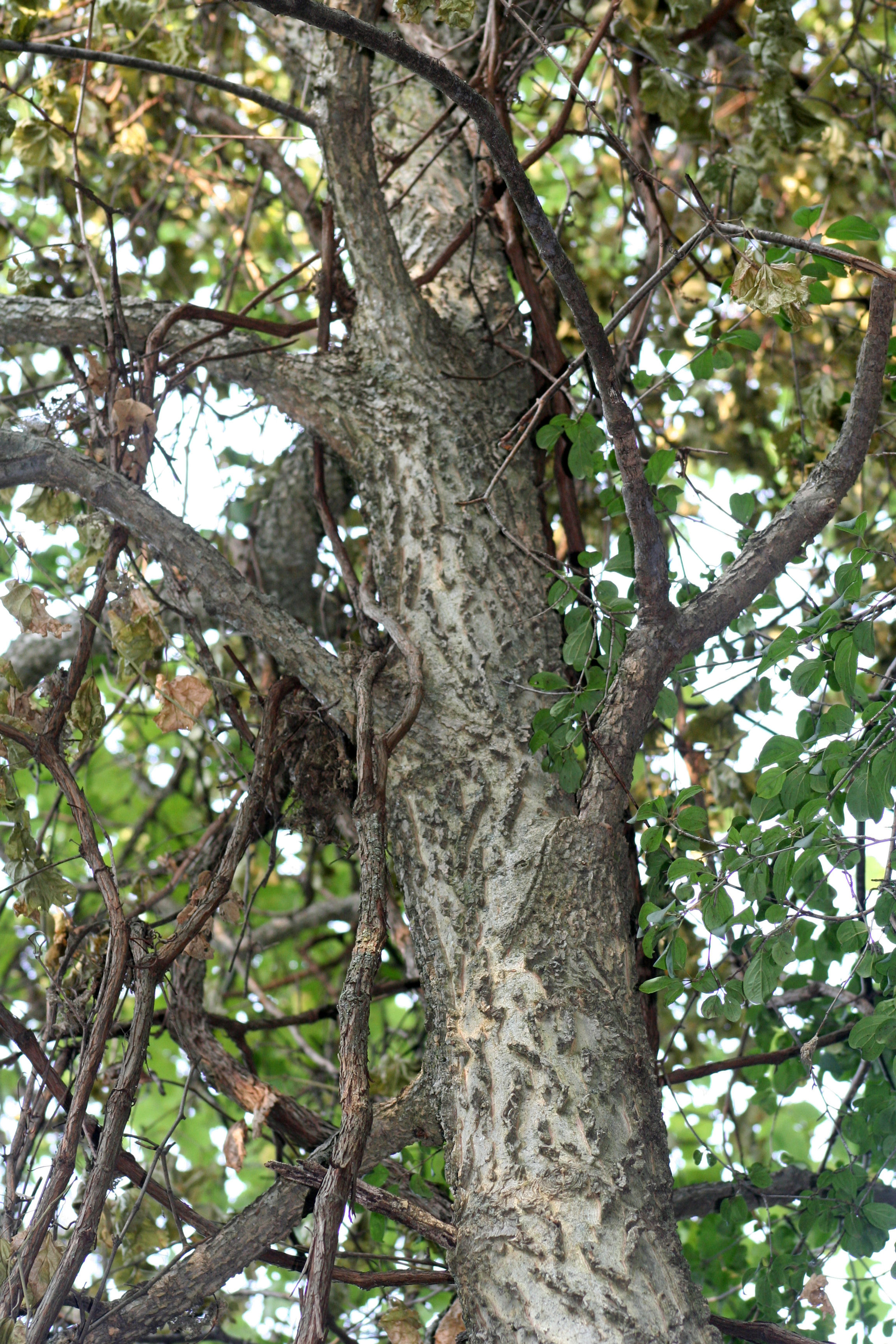
Hackberry has unique gray bark with corky warts and ridges adding winter interst.
Hackberry gets its name from its fruits, also called sugarberries, which have hard seeds inside. Hackberries grow naturally in rich bottomlands along rivers and streams, but they adapt well to a variety of sites including sandy and clay as well as moist and seasonally wet.
Galls and witches' brooms can be unsightly but do not harm the tree. Pruning can help.


